Published on: 25th August 2015Category:
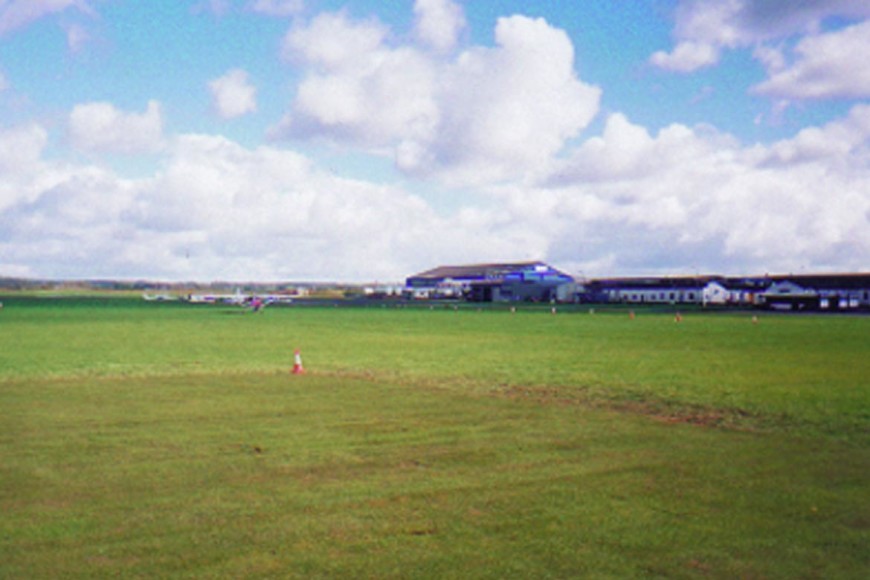
The grass aprons at Exeter International Airport were inaccessible by heavy vehicles during the Winter months as the ground was too soft. Any traffic attempting to cross the area during wet periods left behind deep, potentially hazardous ruts. Previous attempts to repair the area using a plastic mesh underneath the natural turf had been unsuccessful as the soft ground was still unable to be accessed during wet weather.
Fibresand International were called in to provide a solution and recommended Aviation Fibreturf. Installation commenced and in just 2 days the work was complete followed by hydraseeding of the area. Six weeks later the apron was in service. Being composed of a mixture of natural constituents and millions of inert polymer fibres Aviation Fibreturf is is an environmentally friendly alternative to traditional pavement materials such as concrete or asphalt.
Published on: 24th August 2015Category:
Fibresand International commissioned a series of test programs to investigate the products capabilities. These included:-
• The ability of a standard 20 cm layer of AVFT to withstand static and moving wheel loads of between 15 and 25 tonnes.
• The effect of multiple wheel passes as would be experienced in a dual or tri-axle undercarriage arrangement.
• The ability of AVFT to withstand high wheel loads when installed on ground with strengths between CBR 3 and 11.
The results of the research clearly demonstrate that Aviation Fibreturf is capable of effectively supporting heavy vehicle and heavy aircraft wheel loads of up to 25 tonnes on ground conditions with a strength of CBR 4 and above. This equates to a wheel load of 1.38 MN/m2 based on the standard Boeing 747 wheel employed within the test programs.
The tests also concluded the following:-
• Aviation Fibreturf when installed to a standard 20 cm depth supports aircraft wheel loads of up to 25 tonnes of sub grade of CBR 4 and above.
• Rut depths during all tests did not exceed the tyre wall height and the wheel was always able to rotate and move forwards, never becoming embedded in the sub-grade.
• The rolling resistance during the tests ranged from 2.1-5.8 tonnes which is within the publiched tolerance for heavy aircraft undercarriage assemblies.
Published on: 24th August 2015Category:
Lodz International Airport’s faith in Aviation Fibreturf paid off soon after the installation of their new RESA when a 737-8AS accidentally left the runway while lining up for take-off. Heavily laden with a full compliment of passengers, luggage and fuel, the airliner came to a successful and rapid halt while hardly disturbing the surface of the reinforced rootzone. Only the pilot’s attempt to perform a tight turn on the RESA prevented the aircraft returning to the runway without additional assistance.
The secret of Aviation Fibreturf lies in its unique cross linked polymer fibre matrix with grass being an aesthetic component – a fact demonstrated at Lodz.
[embed]https://www.youtube.com/watch?v=bqgfnde90-w[/embed]
Published on: 24th August 2015Category:
Following the successful installation of a RESA, the management at LodzAirport in Poland chose to use Aviation Fibreturf for a second time for a patrol road. The road provides a stable and environmentally friendly, natural grass surface which ensures access to key areas of the airfield in all weather conditions. Essential points on the runway can now be accessed in emergencies by any type of appliance without the need for major disruption of operations associated with traditional pavement construction.
Installation commenced with the removal of the existing turf to the depth specified. The Aviation Fibreturf rootzone was then laid and compacted and after extensive quality tests to guarantee a satisfactory performance the grass seed was applied by a team of turf specialists. Within six weeks a healthy grass cover completed the installation and the patrol road entered service.